Research
Current Research
My research focuses on using the MINERVA survey (insert link) to characterize young globular clusters at high redshift. Globular clusters have been known since at least the time of Edmund Halley, but watching young clusters form has proven immensely difficult. I search for young globular clusters in the MINERVA survey which offers excellent coverage in the rest-frame U-I bands at z<2.
Past Research
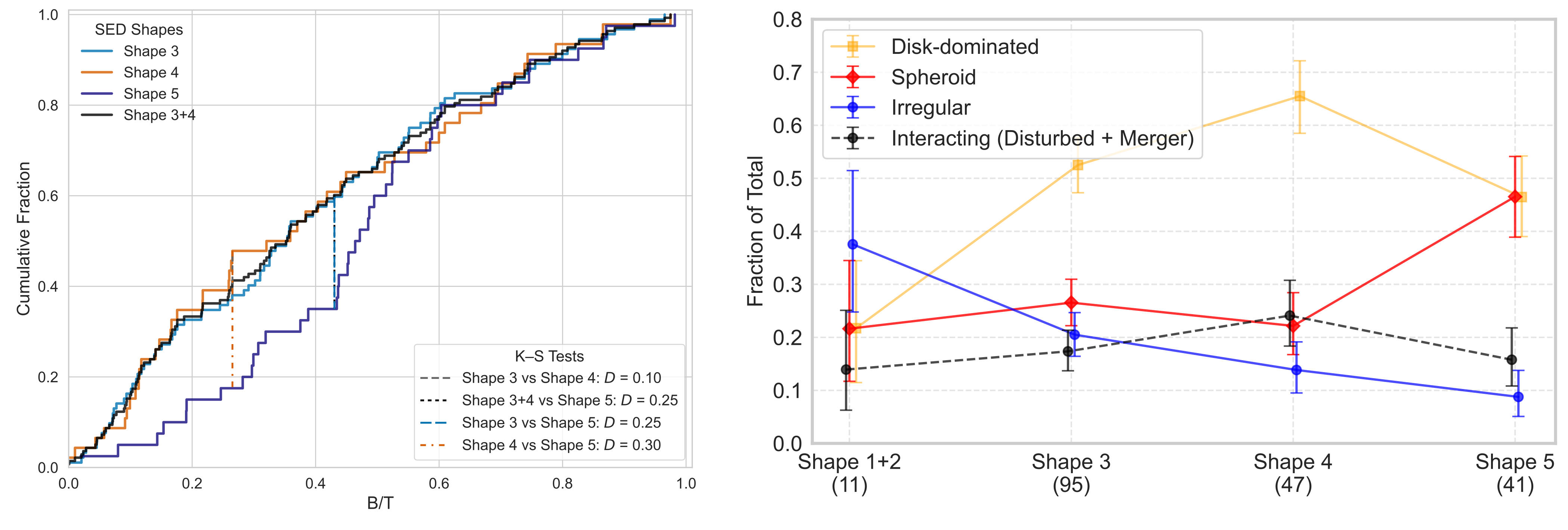
How do supermassive black holes impact their host galaxies? This question has been of critical importance for astronomers attempting to understand the longterm evolution of galaxies over cosmic time. During my bachelors studies at UW - Madison, I investigated 194 galaxies hosting X-ray-detected supermassive black holes in the Great Observatories Origins Deep Survey (GOODS) fields. These are exciting galaxies, as the immense depth of observations in GOODS allow us to detect heavily-obscured AGN that are more representative of the common galaxy than the bright quasars found all across the night sky.
Research Interests
- Globular Cluster Formation
- Survey Astronomy
- Active Galactic Nuclei
- AGN/Host Feedback